Gongfu cha · 功夫茶
Gongfu brewing
Gongfu means “done with skill and time”. A lot of leaf in a small vessel, many short infusions, each one tasting a little different from the last. It’s how tea is brewed where it’s grown, and it’s easier than it looks.
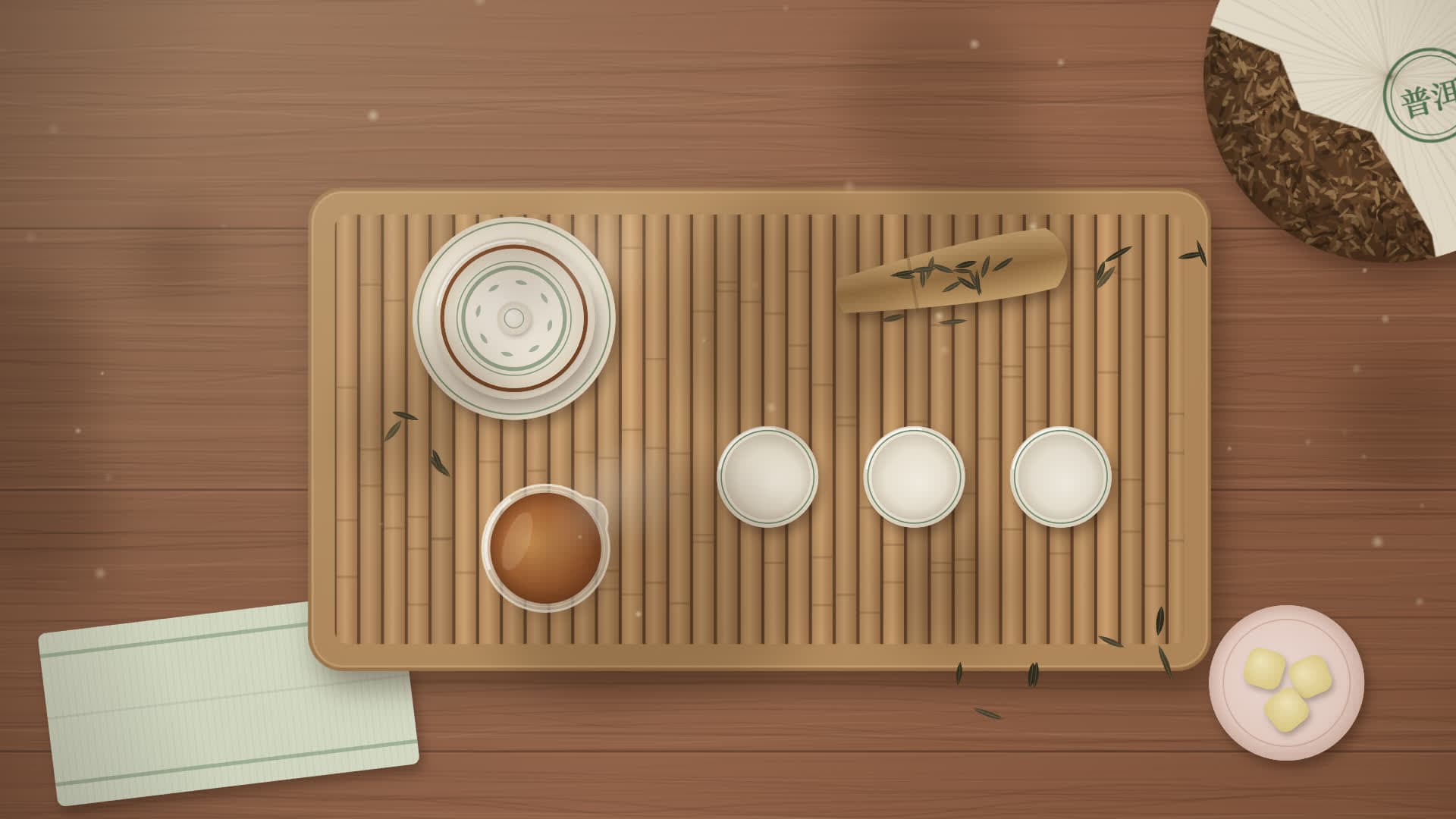
Before you start
What you’ll need
- 盖碗
Gaiwan or small teapot
100–150 ml. A porcelain gaiwan suits every tea; a clay pot rewards the one tea you love most.
- 公道杯
Fair cup
A small pitcher. Decant every infusion into it so each cup gets the same strength.
- 品茗杯
Tasting cups
Thimble-sized, a few sips each. Small cups keep the tea hot and the attention on it.
- 水壶
Kettle and scale
Fresh, soft water at the right heat, and a pocket scale until you can judge leaf by eye.
The method
One session, four steps
Warm the vessels
Pour boiling water through the gaiwan, fair cup and cups, then discard it. Cold porcelain steals heat from the first, most aromatic infusions.
Weigh in the leaf
Far more than for a mug: 5–7 g per 100 ml. Drop it into the warm, empty gaiwan, put the lid on and shake gently, then lift the lid and smell the dry leaf waking up.
Rinse
Cover the leaf with hot water and pour it straight off. This opens rolled oolong and pressed pu’er so the first real infusion isn’t thin. Green and white teas can skip it.
Pour short, pour often
Fill, wait a few seconds, then decant completely into the fair cup and pour for everyone. Leave no water on the leaf between rounds, or it stews.


Per 100 ml of water
Brewing chart
A starting point, not a rule. Add 3–5 seconds each round, and trust your tongue over the timer. Every tea in the shop lists its own parameters too.
| Tea | Leaf | Water | First steep | Infusions |
|---|---|---|---|---|
| Green | 4 g | 80–85°C | 10 s | 3–4 |
| White | 5 g | 90°C | 15 s | 6–8 |
| Rolled oolong | 6 g | 95°C | 15 s | 6–8 |
| Rock oolong | 7 g | 100°C | 5 s | 7–9 |
| Black tea | 5 g | 90–95°C | 8 s | 5–6 |
| Sheng pu’er | 7 g | 95°C | 5 s | 10+ |
| Shou pu’er | 7 g | 100°C | 8 s | 10+ |
When it goes wrong
Adjusting the cup
Every tea, kettle and palate is a little different. Change one thing at a time.
The tea is bitter or harsh
Shorten the steep first, then lower the water a few degrees. Bitterness usually means the leaf sat in water too long, not that there was too much of it.
The tea is thin and watery
Use more leaf rather than longer steeps. Gongfu tastes full because of the leaf-to-water ratio; stretching the time only pulls out tannins.
It was good, then suddenly flat
The leaf is tiring. Add 5–10 seconds per round from about the fourth infusion, and more as the session goes on. When even a long steep tastes faint, you’ve had it all.
I don’t have a gaiwan
Any small teapot with a strainer works, or a mug with a fine sieve: keep the ratio and pour the tea off completely each time.
Ready to pour?
Start with a tea that forgives
Shou pu’er and rock oolong are hard to over-brew: good places to learn the rhythm.